


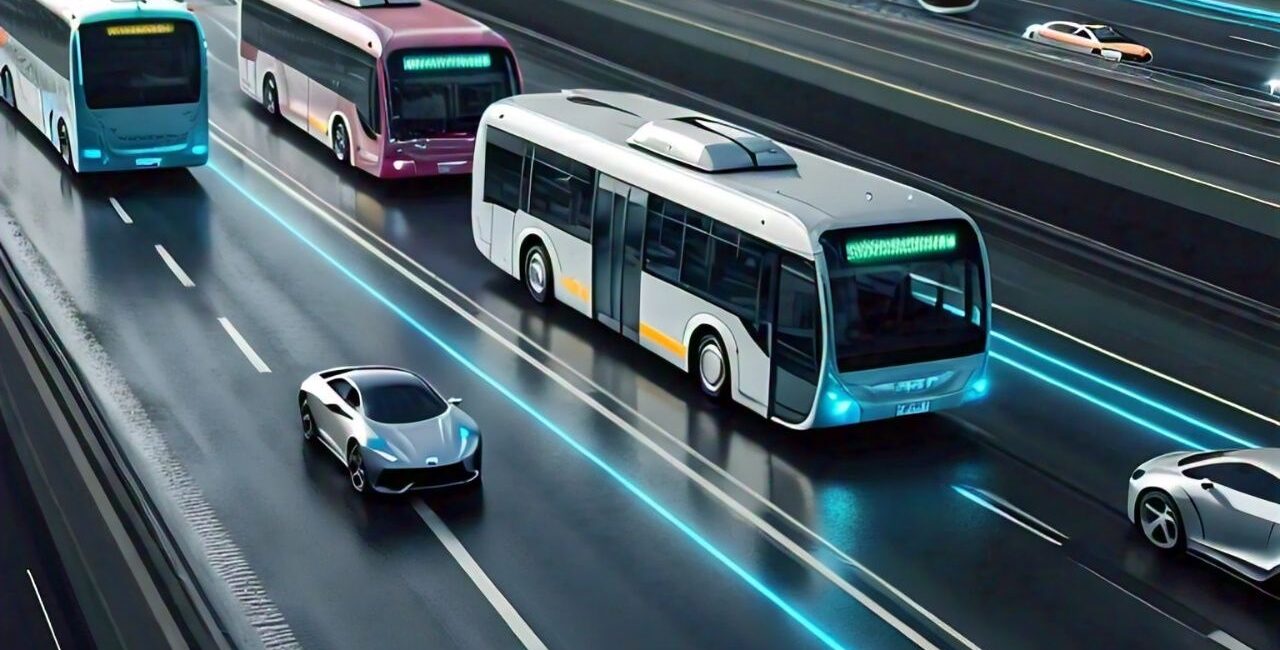
Autonomous vehicles (AV), also known as driverless cars, can operate with little or no human assistance. These vehicles use a combination of sensors, cameras, and artificial intelligence (AI) to sense the environment, make decisions, and track the vehicle’s behavior.
Key technology:
Sensors: Autonomous vehicles (AVs) use various sensors to gather information about their surroundings
LiDAR (Light Detection and Ranging): Emits a laser beam to measure distance and create a detailed 3D map.
Radar: Detects objects using radio waves. There isn’t much that can be
Cameras: Capture data, helping vehicles recognize objects, road signs, and traffic signs.
Ultrasonic Sensor: Detects nearby objects with sound waves.
Artificial intelligence: AI algorithms process sensor data to understand the vehicle’s environment. and decide on steering Acceleration and braking
Machine Learning: This technology helps the car learn from experience and improve its performance.
Levels of Autonomy:
The Society of Automotive Engineers (SAE) has defined six levels of automotive automation:
No automation: the driver does all the work.
Partially automated systems: Driver assistance systems, such as navigation and road maintenance support, play a crucial role in enhancing safety and efficiency on the road.
Conditional Automation: The car can handle certain driving tasks under specific conditions. But the driver must be prepared to take control.
Highly automated: Cars can handle most driving tasks in most situations. But human intervention is still possible.
Fully Automated: The vehicle can perform all driving operations under all conditions without human intervention.
Driverless: A car that autonomously drives without a steering wheel or pedals.
Potential Benefits:
Improved safety: AVs have the potential to significantly reduce accidents caused by human error.
Increased accessibility: AVs can provide transportation options for people who are unable to drive themselves.
Reduce traffic congestion: AVs can optimize traffic flow and reduce congestion.
Reduced environmental impact: AVs can save energy and reduce greenhouse gas emissions.
Challenges:
Technology Complexity: Developing reliable and safe AV technology is a complex engineering challenge.
Ethical Considerations: AV raises ethical questions regarding responsibility. Confidentiality and the impact on actions
Infrastructure: Existing infrastructure may need to be modified to support AV.
Public acceptance: Public trust and acceptance of AV technology is critical to widespread adoption.
AV technology is still in development. But it promises to revolutionize transportation and improve our lives in many ways.

Other Articles

The Power of IR: Infrared Signal Technology Explained
Wearable Tech: The Ring Mouse Innovative input device
