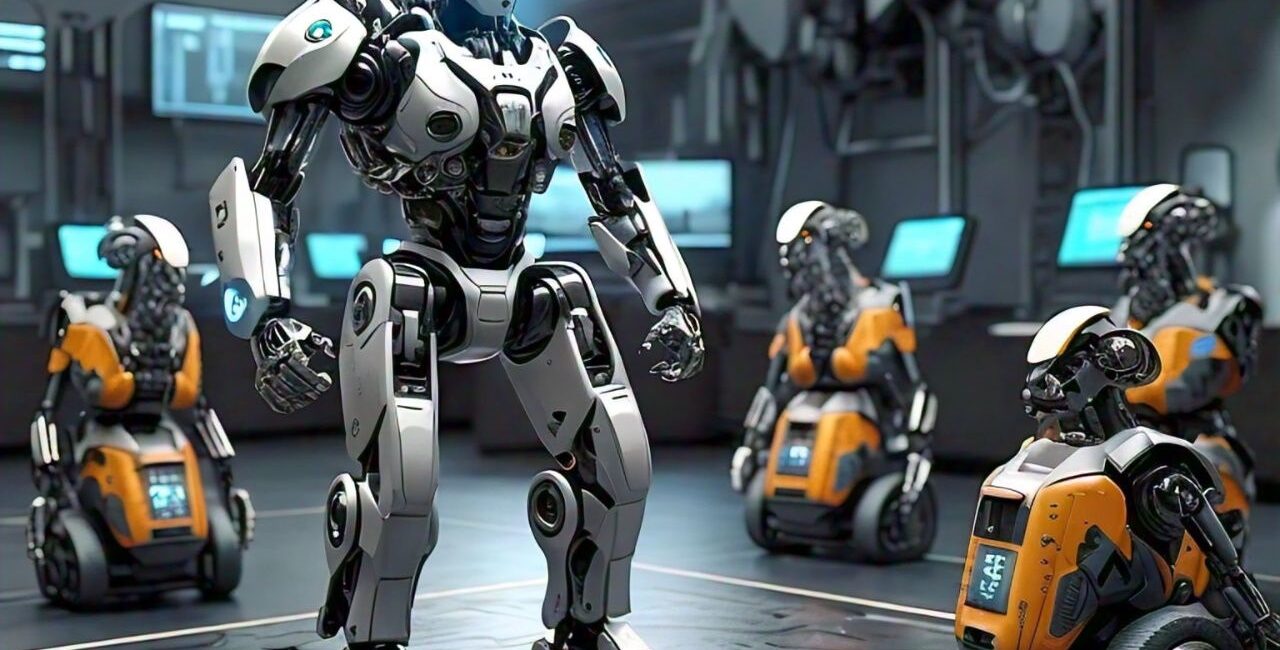
Today, robots are used to perform a variety of tasks. And their algorithms are critical to real-world operations.
Researchers at UC Berkeley have developed a RoVi-Aug framework that improves robot data and helps transfer data to other robots. Modern machine learning and modeling have normalized data to fit almost any model, so researchers want to do something similar with robots that can normalize data. Since the beginning of this year, Researchers have tried to normalize the robot data and conducted various experiments. with such information In previous research, The researchers realized that there were still some challenges in generalizing robot data. They found that if robot data is distributed differently, Teaching the same skills to other robots may be less effective.
However, the researchers found that many robots have unequal data sets. It includes the Open-X Embodiment (OXE) dataset that is widely used to train robot algorithms. Such an imbalance can also limit the robot’s performance. To solve this problem Researchers have proposed a new algorithm called Mirage, which uses a cross-painting technique to transform an invisible robot into a source robot.
However, this algorithm also has some limitations. First, an exact robot model and camera are required. and cannot adjust the camera angle The researchers presented RoVi-Aug, which is flexible and customizable. And it is possible to create synthetic images that show the robot’s operation from different angles. In addition, RoVi-Aug does not require additional processing during use. and can change the camera angle from different perspectives It could help researchers train other robots.

Other Articles

Criminal Gangs Exploit Telegram for Cybercrime and Data Theft
2024 Cryptocurrency Market Outlook: Price Predictions and Trends