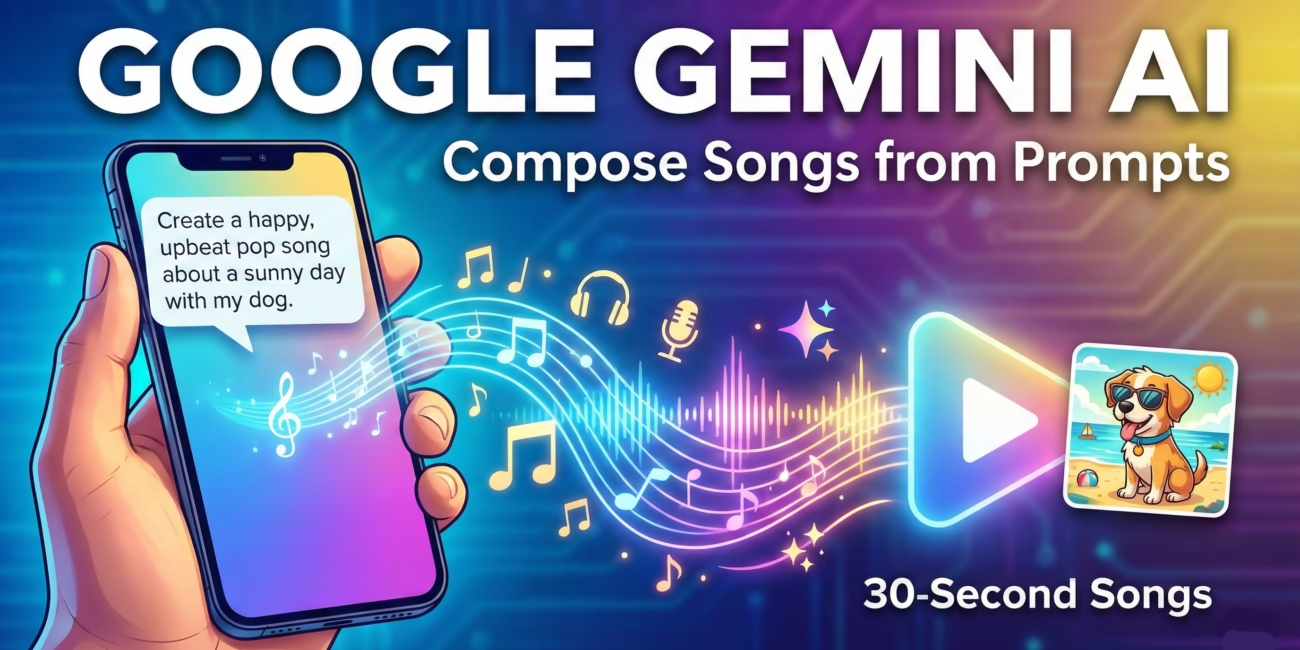
How Google Gemini AI is Changing Everyday Music Creation: Make 30-Second Songs from Scratch
For years, we have watched artificial intelligence evolve from generating simple text responses to creating highly detailed images. Now, the next logical step in that progression has arrived: audio. If you have been following the tech space, you might have noticed that Google Gemini AI recently rolled out a fascinating new feature that allows users to generate 30-second custom songs directly from basic prompts.
As someone who closely monitors how these tools develop, I can say that this isn’t just another gimmick. It represents a significant shift in how everyday people interact with creative technology. Let’s break down exactly how this new audio generation works, what’s happening behind the scenes, and what it means for everyday users.
Understanding the Engine Behind the Music
From practical experience, most early attempts at AI music generation felt robotic and disjointed. You might get a decent beat, but the vocals would sound like a malfunctioning computer. Google is tackling this issue by powering their new feature with Lyria 3, a highly advanced music generation model developed by Google DeepMind.
What makes this iteration interesting is its versatility. You don’t just have to type out a highly specific text prompt. Users can feed the AI a photo, a video snippet, or just a simple description of a mood or an inside joke. From that single input, the system works out the genre, the instrumentation, and the overall vibe.
Here is what you actually get when you hit generate:
- A 30-second audio track: This can be fully instrumental or feature vocals.
- Custom Lyrics: You don’t need to be a songwriter. The AI writes the lyrics for you based on your prompt.
- Cover Art: The system uses an image generation tool (dubbed Nano Banana) to create matching album artwork, making the final result immediately ready to share.
How It Performs in Real-World Use
When testing or observing new tech tools, the biggest question is always about friction—how hard is it to actually get a good result?
In real-world use, this tool is designed to remove almost all the friction from the creative process. If you want a jazzy tune about your dog stealing a slice of pizza, you just ask for it. You don’t need to specify the tempo, the key signature, or write a rhyming chorus. The AI handles the heavy lifting.
It is important to set expectations, though. This tool is currently available for users aged 18 and older. While anyone with access can use it, those who subscribe to Google’s premium tiers (like Plus, Pro, and Ultra) get higher usage limits. However, the goal here is not to help you produce a commercial, radio-ready hit. It is built to be a playful, expressive tool for quick experimentation and sharing a laugh with friends.
Copyright, Safety, and the “Invisible” Watermark
One of the biggest conversations surrounding AI right now is how it interacts with copyrighted material. Many users notice that the line between “inspiration” and “stealing” can get blurry with generative models.
Google seems highly aware of this hurdle. They have implemented a few strict guardrails:
- No Direct Copying: If you prompt the AI to make a song that sounds exactly like a famous pop star, it won’t do it. It will draw broad stylistic inspiration (like a specific genre or era) but it actively avoids replicating real, copyrighted music.
- SynthID Watermarking: Every single track generated by this system includes an invisible, inaudible watermark known as SynthID. This ensures that the audio can always be traced back and identified as AI-generated, which helps prevent misinformation and deepfakes.
- Content Filters: The system has built-in filters to block inappropriate content and prevent copyright infringement, with reporting tools available if something slips through the cracks.
A Global Approach to Audio
A great piece of software is only useful if people can actually understand it. Fortunately, the tool isn’t locked to just English. It currently supports a solid roster of languages, including Spanish, French, German, Hindi, Japanese, Korean, and Portuguese. This means the AI can generate localized lyrics and vocals that sound natural to native speakers.
Final Thoughts
The ability of Google Gemini AI to instantly compose a 30-second track complete with lyrics and cover art is a great example of where consumer technology is heading. It takes complex, studio-level processes and condenses them into a simple text box. While it won’t replace human musicians or professional producers, it gives the average person a fun, accessible way to experiment with music creation without needing a background in audio engineering.