The smartphone landscape moves incredibly fast. What we considered “overkill” just a couple of years ago is now the expected baseline for premium devices. As we constantly track the latest innovations here at WorldTechPulse.com, it has become abundantly clear that mobile manufacturers are pushing pocket-sized hardware closer to desktop-level performance than ever before.
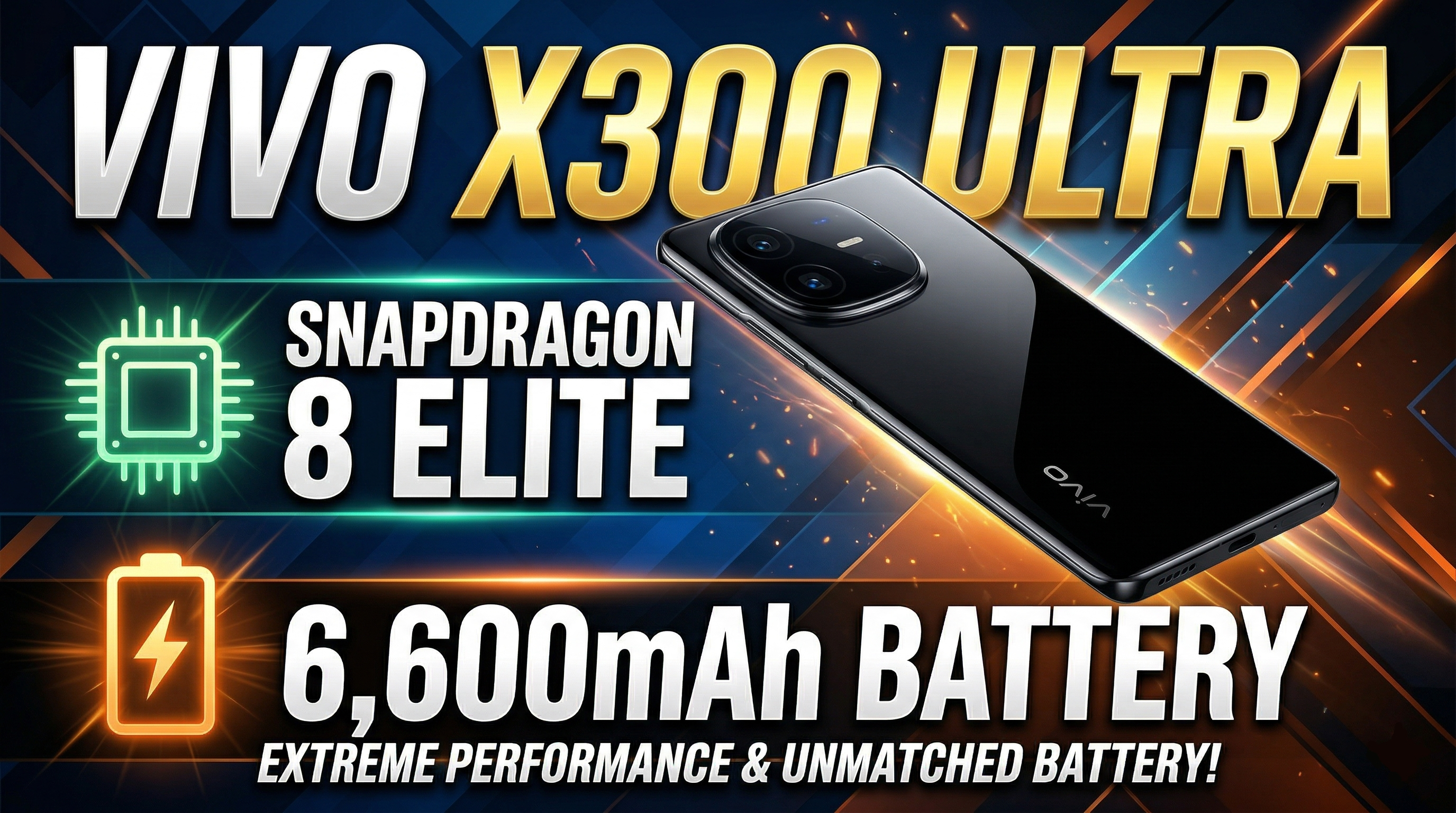
Leading this aggressive charge is the Vivo X300 Ultra. This isn’t just another yearly spec bump; it represents a fundamental shift in how we balance raw processing power, thermal management, and battery longevity. By combining the cutting-edge Snapdragon 8 Elite chipset with a jaw-dropping 6,600mAh battery, this device answers a question many power users have been asking: How do we get uncompromising performance without living tethered to a wall charger?
Let’s break down exactly what these specifications mean for you on a daily basis, cutting through the marketing hype to look at real, practical performance.
The Processing Powerhouse: Understanding the Snapdragon 8 Elite
For years, we’ve heard promises of “desktop-class” processors in our phones. With the Snapdragon 8 Elite, that claim is finally starting to hold serious weight. But what does that actually mean when you pull the phone out of your pocket?

From practical experience, synthetic benchmarks and high benchmark scores only tell half the story. The real magic of the Snapdragon 8 Elite lies in its sustained efficiency and its ability to handle complex, on-device AI tasks without breaking a sweat. In the past, tasks like generating high-resolution images, real-time voice translation, or complex video rendering required a constant internet connection to offload the heavy lifting to cloud servers.
The Snapdragon 8 Elite changes this dynamic by processing these heavy workloads locally. This means faster results, better privacy, and a much smoother user interface. Whether you are heavily multitasking between resource-intensive applications, editing 4K video footage on your commute, or playing graphically demanding games at maximum frame rates, the processor is designed to handle it without those annoying micro-stutters that plague lesser chips.
Many users notice that as their phones age, the interface starts to lag. The sheer architectural headroom of the Snapdragon 8 Elite acts as a buffer against this kind of software degradation, ensuring that the device feels just as snappy in year three as it did on day one.
Thermal Management: Taming Desktop-Level Heat in a Mobile Form Factor
This brings us to a crucial topic that often gets overlooked in smartphone reviews: cooling. If you look at the wider technology landscape in 2026, heat management is the single biggest bottleneck for performance. In the PC space, enthusiasts are currently debating whether complex, expensive water-cooling loops are strictly necessary to keep modern high-wattage desktop processors from melting down.
Mobile engineers face a significantly harder puzzle. You cannot fit a liquid pump, spinning fans, or a massive copper radiator into a device that is less than nine millimeters thick. Yet, the Snapdragon 8 Elite is capable of drawing serious power, which inevitably creates serious heat.
So, how does the Vivo X300 Ultra handle this without turning into a hand-warmer?
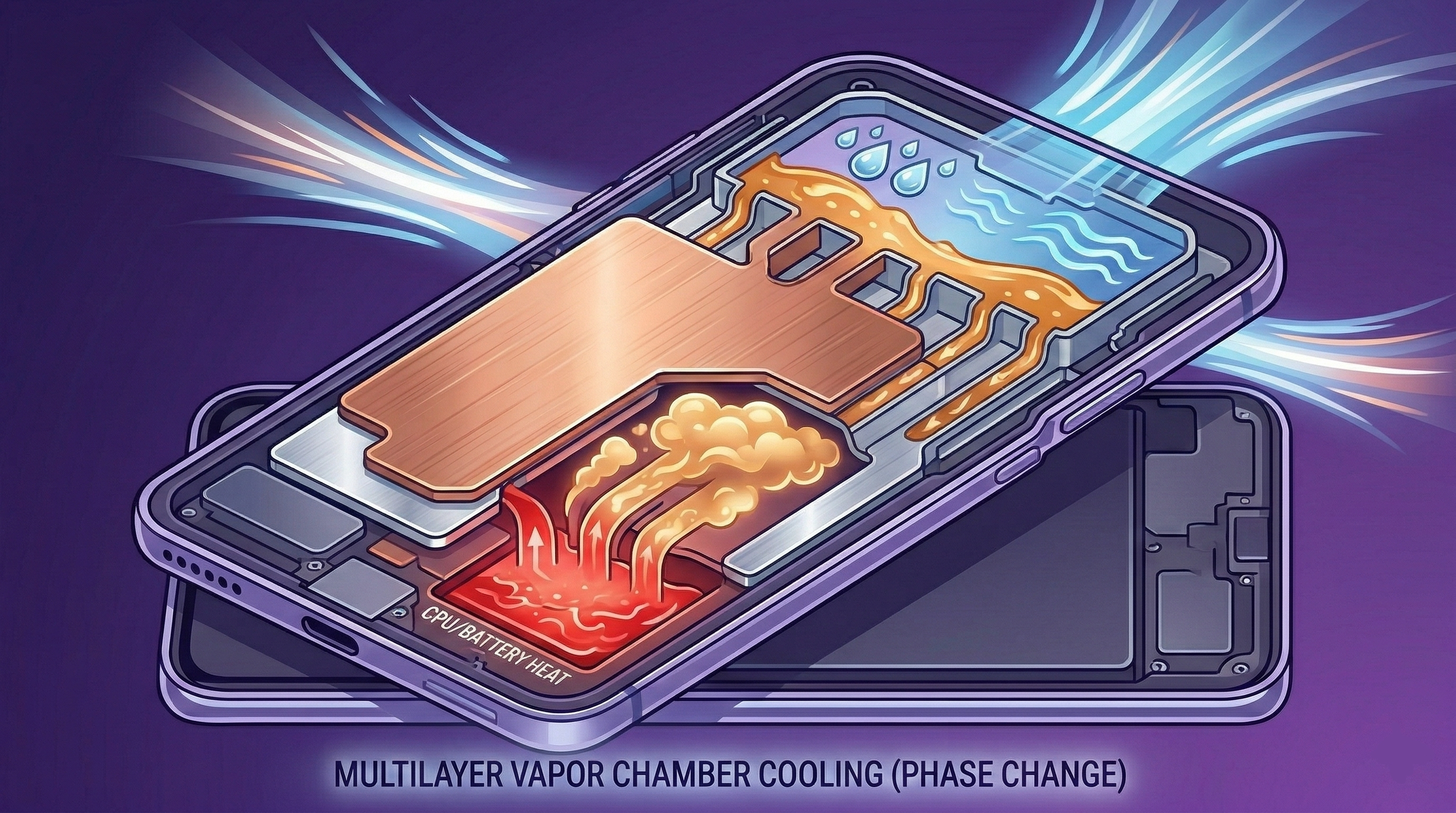
The answer lies in advanced passive cooling technologies. To prevent the Snapdragon 8 Elite from thermally throttling—which is when a phone artificially slows itself down to prevent overheating—the Vivo X300 Ultra utilizes a massive, multi-layered vapor chamber cooling system. This system spans almost the entire internal footprint of the device.
When the processor generates heat during an intense gaming session or an extended 4K video recording, the liquid inside the vapor chamber evaporates, travels to a cooler area of the phone to dissipate the heat, condenses, and cycles back. It is a brilliant piece of engineering. In real-world use, this means your screen won’t suddenly dim, and your frame rates won’t suddenly drop after twenty minutes of heavy use. It offers the kind of sustained performance stability we usually only expect from actively cooled gaming laptops.
The Game Changer: Unleashing a 6,600mAh Battery
No matter how powerful a processor is, it becomes entirely useless the moment your screen goes black. This is where the Vivo X300 Ultra truly separates itself from the rest of the flagship pack.
For the last few years, the industry standard for a large smartphone battery has hovered around 5,000mAh. Pushing past that limit was generally avoided because traditional lithium-ion batteries take up too much physical space. Making the battery bigger meant making the phone uncomfortably thick and heavy.
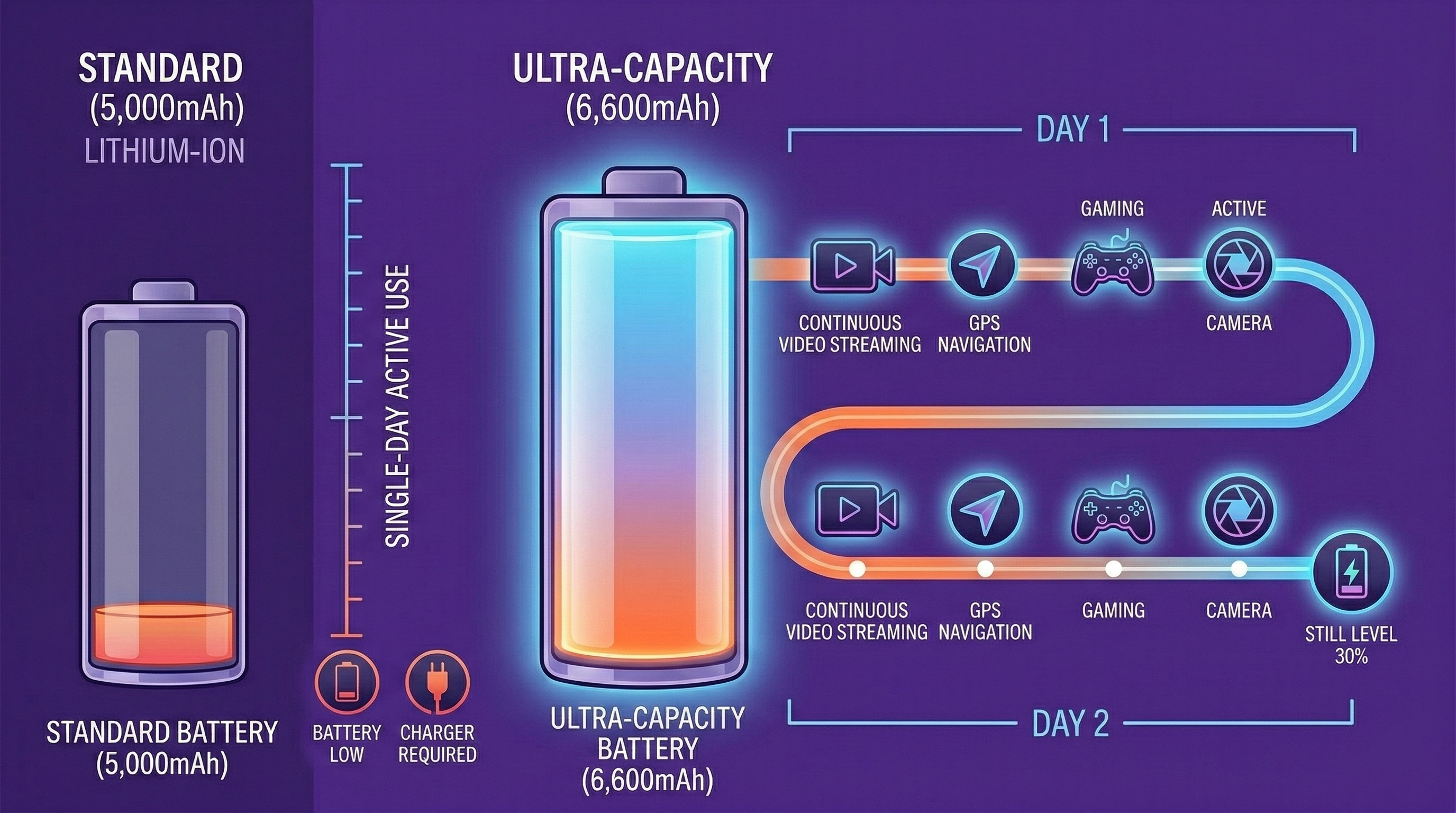
However, thanks to recent breakthroughs in silicon-carbon battery technology, manufacturers can pack significantly more energy density into the same physical footprint. This allows the Vivo X300 Ultra to house a colossal 6,600mAh battery without feeling like a literal brick in your pocket.
Why Do We Need 6,600mAh?
You might wonder if a battery this large is truly necessary. The short answer is an absolute yes.
Modern smartphones are battling incredible power drains. We are looking at massive, ultra-bright OLED displays with 120Hz or even 144Hz refresh rates. We have constant 5G connectivity, background location tracking, and the aforementioned on-device AI processes that constantly pull power.
When you pair all of these demanding features with the Snapdragon 8 Elite, a traditional 5,000mAh battery simply struggles to make it through a heavy day of use.
From practical experience, the jump to a 6,600mAh battery is completely transformative. It eliminates “battery anxiety” entirely. In real-world use, this translates to a genuine two-day smartphone for the average user. For power users—those who are constantly on video calls, using GPS navigation, or shooting high-resolution photos and videos—it means you can confidently leave your house at 7:00 AM, use your phone relentlessly, and still go to bed with 30% or 40% battery remaining.
Fast Charging the Giant
Of course, a massive battery takes longer to charge, which is why charging speeds are equally important. While exact wattage varies depending on your region and the specific charging brick used, the Vivo X300 Ultra is equipped with ultra-fast wired and wireless charging protocols. The advanced battery chemistry not only holds more power but is designed to accept rapid currents without degrading the overall lifespan of the cell. You can typically plug the phone in while taking a shower and gain enough percentage to easily get through an entire workday.
Beyond the Core Specs: What Else Makes an Ultra?
While the combination of the Snapdragon 8 Elite and the 6,600mAh battery forms the foundation of this device, a true “Ultra” phone must deliver a holistic, premium experience.
Vivo has a long-standing reputation for pushing the boundaries of mobile photography, and the X300 Ultra continues this legacy. While the processor handles the advanced image signal processing (ISP) to reduce noise and balance exposure in real-time, the physical lenses themselves offer incredible versatility. From massive primary sensors that pull in light in near-pitch-black conditions to periscope telephoto lenses that allow for optical zoom without losing crisp detail, the camera system is designed to replace your dedicated point-and-shoot camera entirely.
Furthermore, the software experience has been refined to take advantage of this new hardware. Animations are fluid, background app management is less aggressive (because the massive battery means the phone doesn’t have to ruthlessly kill background tasks to save power), and the overall user interface feels incredibly responsive.
Final Verdict: The Dawn of a New Standard
We are entering an era where smartphone users no longer have to compromise. You no longer have to choose between having the fastest phone on the market or the phone with the longest battery life.
The Vivo X300 Ultra proves that with the right internal engineering and the adoption of next-generation battery chemistry, we can have both. The Snapdragon 8 Elite provides the raw, unbridled horsepower necessary for tomorrow’s demanding applications, while the incredibly well-engineered cooling system keeps that power in check. Most importantly, the 6,600mAh battery ensures that all of this cutting-edge technology actually stays powered on when you need it most.
For anyone who relies heavily on their mobile device for work, entertainment, and capturing life’s moments, this combination of specs isn’t just a luxury—it’s a massive leap forward in everyday usability. It sets a very high bar for what a premium flagship should look and feel like in 2026 and beyond.