I’ve spent the last decade crisscrossing time zones, and if there is one thing I’ve learned, it’s that travel is as much about energy management as it is about logistics. In 2026, the era of fumbling with paper maps or frantically searching for a SIM card vendor at the airport is effectively over.
The new wave of travel wearables has fundamentally shifted how we explore the world. These devices aren’t just fitness trackers anymore; they are localized guides, safety nets, and health monitors wrapped around your wrist or finger.
If you are planning an international trip this year, here is why you need to look beyond your smartphone and start trusting the tech you wear.
Navigating the Unknown Without a Phone
We have all been there: standing on a busy street corner in a foreign city, staring at a phone screen while pickpockets eye us as easy targets. One of the most practical shifts in travel wearables this year is the move toward “heads-up” navigation.
The Rise of Wrist-Based Mapping
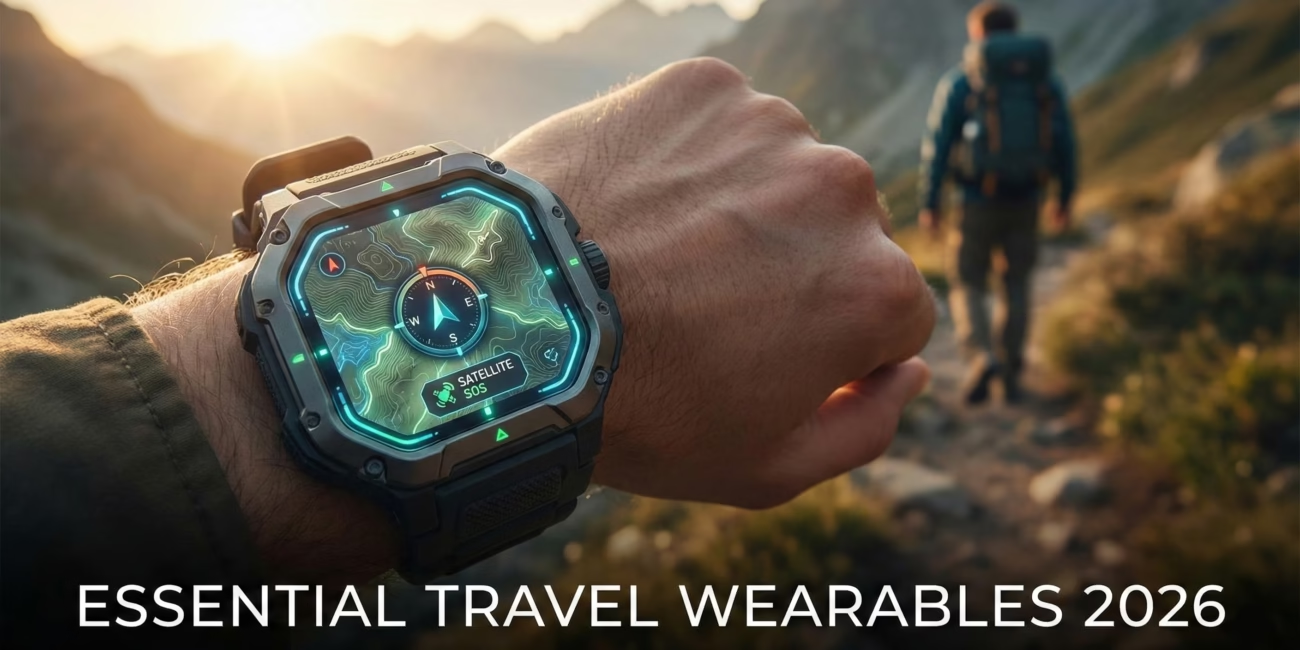
Modern smartwatches have evolved into fully independent navigation units. Devices like the latest adventure-focused watches now come with pre-loaded topographical maps that work entirely offline.
In real-world use, this is a game-changer. I recently hiked a trail where my phone had zero signal. Instead of panicking, I simply glanced at my wrist to see my exact GPS coordinates overlaid on a map of the terrain. This isn’t just convenient; it allows you to stay present in the moment rather than being glued to a screen.
The Satellite Safety Net
Perhaps the most critical innovation for solo travelers is the integration of satellite SOS technology directly into wearables. You no longer need a bulky separate communicator. If you break an ankle in the Alps or get lost in the Outback, a simple press of a button on your watch can beam your location to emergency responders via satellite, completely bypassing local cell networks.
Conquering the Traveler’s Curse: Jet Lag
Jet lag used to be the price we paid for seeing the world. Now, it’s a data point we can manage.
Smart Rings as Recovery Coaches
While watches are great for daytime utility, I’ve found that smart rings are superior for the flight itself. They are discreet, comfortable enough to sleep in, and offer a level of health insight that is surprisingly deep.
The latest generation of rings doesn’t just track sleep; they act as proactive recovery coaches. They monitor your body temperature and Heart Rate Variability (HRV) to tell you exactly how stressed your body is from the flight.
For example, after a long-haul flight to Tokyo, my wearable didn’t just tell me I was tired—it specifically advised me to avoid high-intensity exercise for 24 hours and suggested precise windows for light exposure to reset my circadian rhythm. Following that advice made the difference between a groggy first day and hitting the ground running.
Adapting to Altitude
For those heading to high-altitude destinations like Cusco or Denver, newer wearables now feature specialized sensors that monitor blood oxygen levels relative to elevation. They can warn you if you are ascending too fast, helping you avoid altitude sickness before the symptoms even kick in.
The “Empty Pockets” Freedom
There is a unique kind of freedom in walking out of your hotel room with absolutely nothing in your pockets.
Travel wearables have matured to the point where they can handle almost every daily transaction. With the universal adoption of contactless payments, your watch is your wallet. But it goes further than that—major transit systems in cities like London, New York, and Singapore allow you to tap-to-pay for rides directly with your wearable.
Combined with LTE or eSIM capabilities that let you take calls and stream music without your phone, you can explore a new city with a level of minimalism that feels incredibly liberating.
Choosing the Right Gear for Your Trip
Not every traveler needs a military-grade GPS watch. Here is how I recommend breaking it down:
- For the Urban Explorer: Look for a smartwatch with a bright screen, strong NFC payment support, and cellular connectivity. You want convenience and battery life that lasts a full day of sightseeing.
- For the Adventure Junkie: Prioritize durability (titanium or rugged polymer), multi-band GPS accuracy, and battery life measured in weeks, not days.
- For the Business Traveler: A smart ring is often the best choice. It looks professional in a meeting, keeps you on top of your sleep hygiene, and doesn’t constantly buzz with notifications during client dinners.
Travel in 2026 is smarter, safer, and more connected than ever. By choosing the right travel wearables, you aren’t just buying a gadget; you are buying the peace of mind to truly get lost in the adventure.

Other Articles

Best of CES 2026: 15 Cutting-Edge Tech Trends & Products